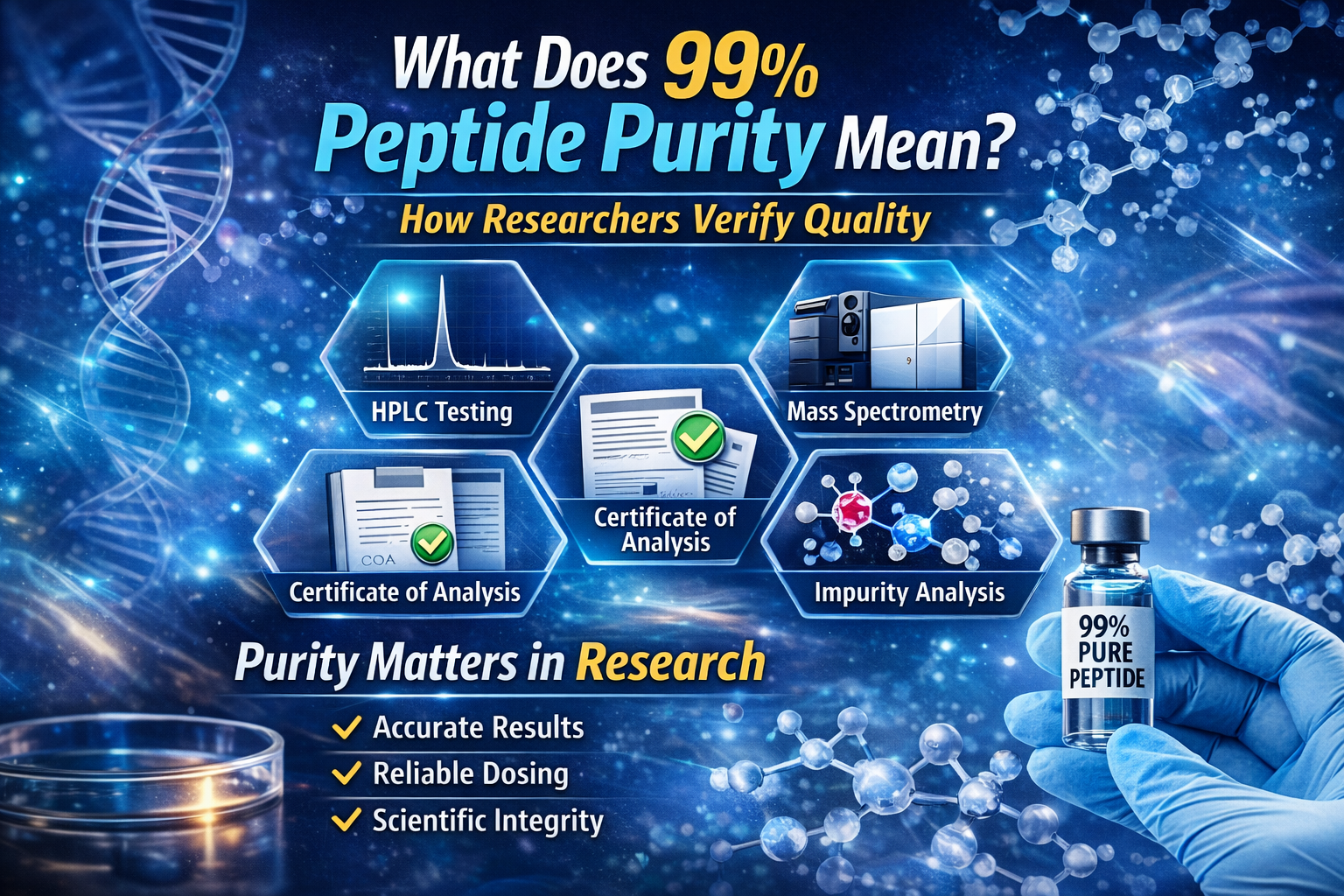
Peptide Testing: Hplc & Mass Specification Purity Guide Pinnacle The key methods for measuring peptide purity are High-Performance Liquid Chromatography (HPLC) and Mass Spectrometry (MS). HPLC divides the target peptide from pollutants, quantifying purity. MS verifies the peptide's identity by gauging its specific mass. These two methods offer complementary details and are the gold requirement in the peptide sector. Peptide pureness means the percent of the target peptide series in a sample contrasted to pollutants. It's crucial due to the fact that impurities can alter research results, affect medication safety and security, and compromise speculative reproducibility, making high purity crucial for precise scientific research.
Regularly Asked Concerns (Frequently Asked Questions) About Laboratory Recognition In Peptide Research Study
Where can I send my peptides to test for purity?
ACS Peptide Evaluating Labs is an expert peptide evaluation laboratory that accepts examples from all 50 states. Whether you require to evaluate peptide purity, validate a supplier''s Certification of Evaluation, or run comprehensive contaminant testing, our laboratory offers quickly, precise outcomes with comprehensive coverage.
This is very rarely the case, nevertheless well a method is maximized, and the risk of side responses and insufficient responses implies that peptide pureness becomes a crucial issue in the context of the application. Another associated term you could encounter is internet peptide web content, which is different from purity. Net peptide content refers to just how much real peptide (by weight) is in the vial relative to non-peptide elements like water, counter-ions (e.g., TFA), or buffer salts. It's feasible to have a peptide that is, state, 95% pure by HPLC and yet the net peptide content is something like 70% of the powder's weight (the Scientific Supplier remainder being water and salts). Don't be surprised-- this is regular and is typically established by separate analyses (like amino acid evaluation). If a peptide is re-tested after storage tension, HPLC can reveal whether new contamination optimals have actually shown up or whether the primary height area has actually decreased. This connects directly with taking care of subjects such as peptide storage and peptide reconstitution. Independent, third-party testing plays a vital duty in making certain neutrality and precision. By utilizing exterior labs for verification, vendors get rid of bias and support scientific trustworthiness.
Example Invoice
At minimum, identity and pureness https://privatebin.net/?2cc391565eb3c88c#4ueAShW2Jgmphi2ZDXX7GvqdukB5hz6zSYuHVDeRsuxv should be validated per set. Vendors that give the same COA for months of manufacturing are not demonstrating ample quality assurance. The process functions by passing the peptide solution through a column packed with specialized material. Different substances connect with this product in different ways, triggering them to emerge from the column at various times. A detector measures what appears, creating a chromatogram showing peaks for each substance present.
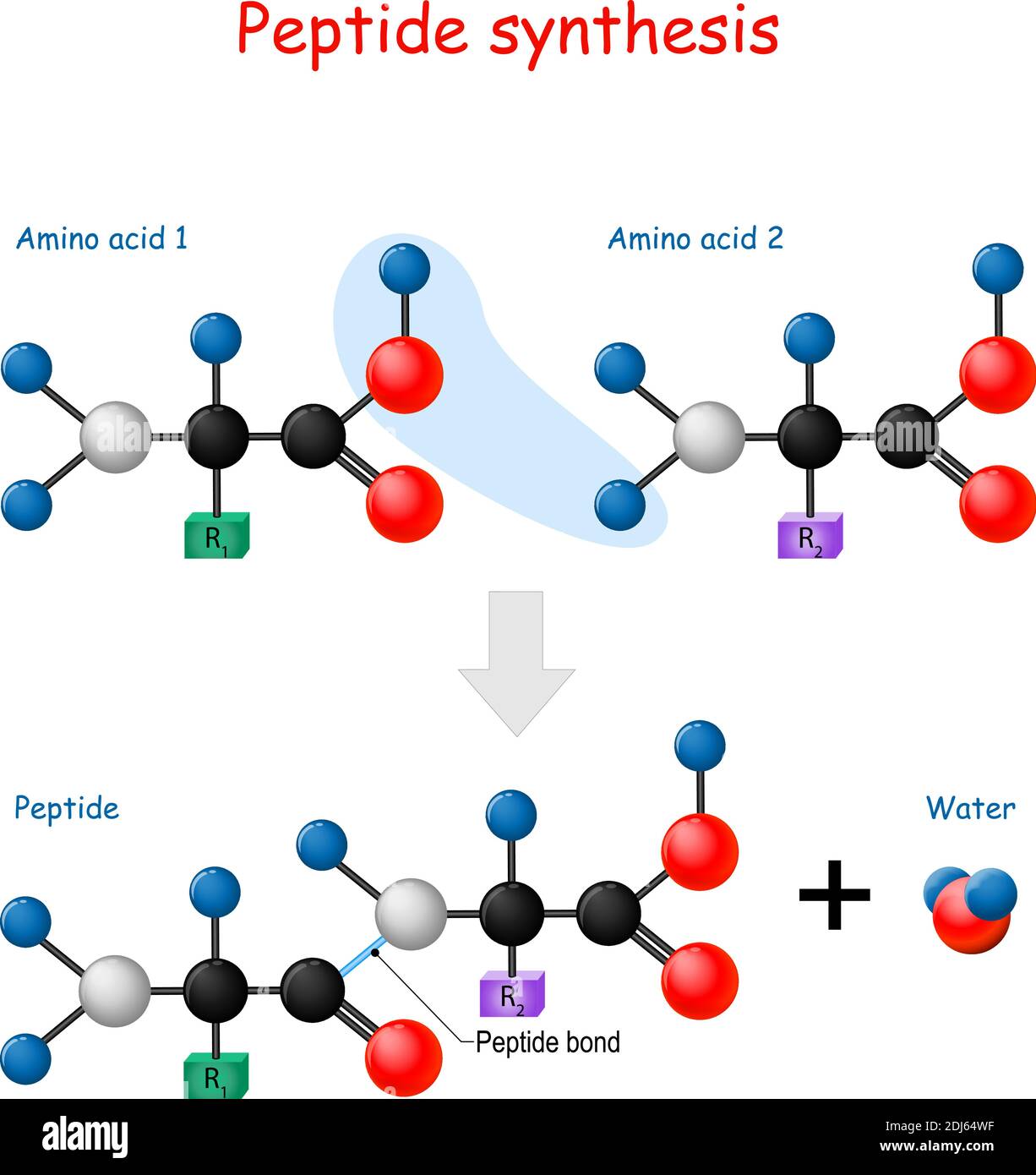
The very same item consumers obtain is the item sent for analysis.A strong examination report can support pureness, identity, and set traceability.Solid Phase Peptide Synthesis (SPPS) is based on sequential addition of alpha-amino and side chain shielded amino acid residues to an insoluble polymeric support.If the target peptide's optimal represent 99.1% of the overall peak location, the peptide is reported as 99.1% pure by HPLC.This not just pleases lawful demands however eventually protects individual security.
The laboratory offers HPLC pureness analysis and mass spectrometry identity verification. A chromatogram reveals tops representing various substances spotted during HPLC evaluation. The primary height, usually the largest, represents your target peptide.